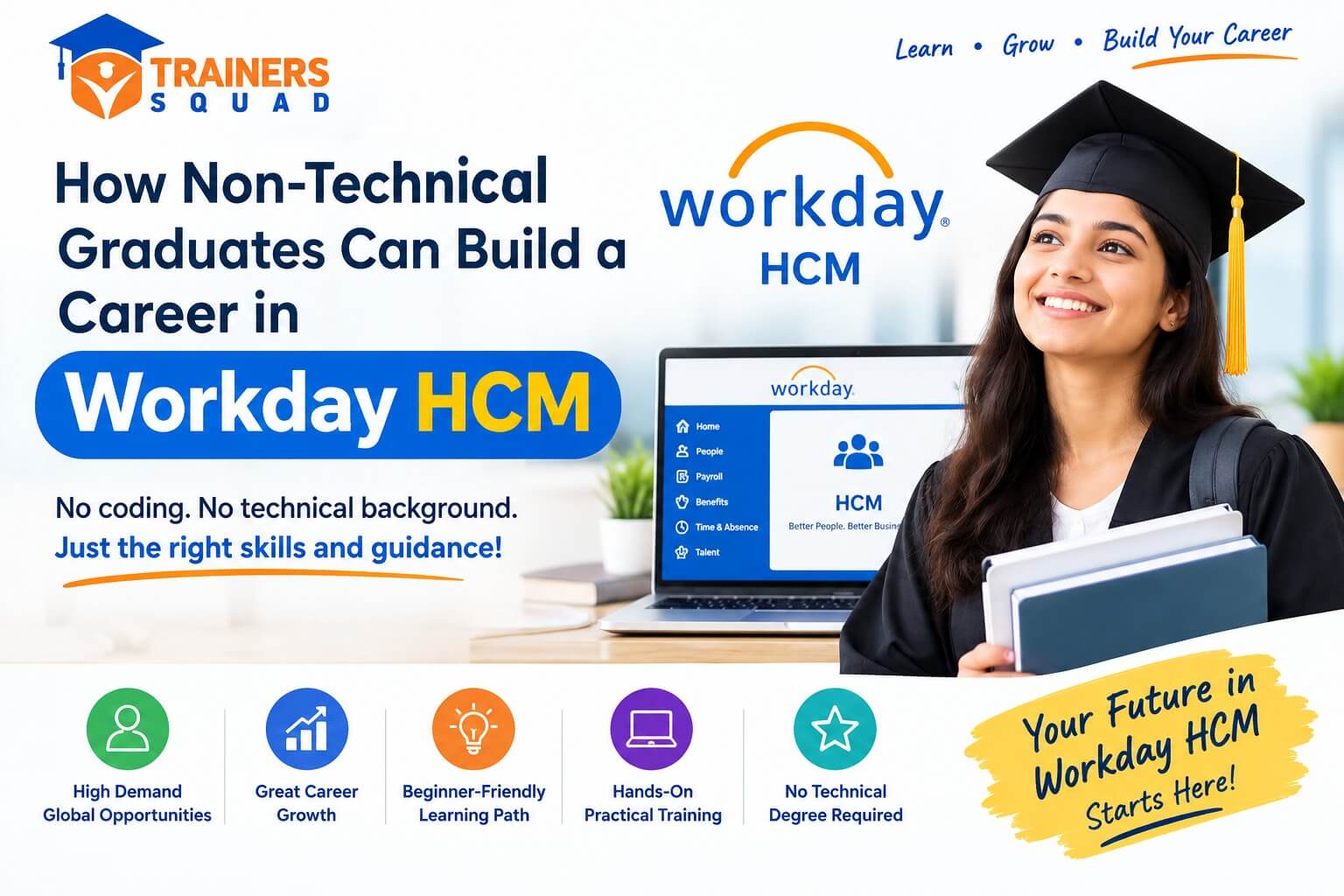
Building a career in the IT industry is possible even if you do not have a technical background. Many non-technical graduates are exploring enterprise software careers because businesses need professionals who understand business processes and technology. Workday HCM (Human Capital Management) is one area worth exploring for people interested in human resources, employee management, and business operations. Learning about workday hcm certification requirements can help beginners understand the available certification pathways and prepare for a career in Workday HCM. With structured learning, practical knowledge, and career guidance, non-technical graduates can begin developing skills relevant to Workday HCM roles. trainers squad offers Workday training options for learners who want to understand the platform and explore potential career opportunities.
What Is Workday HCM?
Workday HCM is a cloud-based platform that helps organizations manage their workforce and human resources activities. It supports business functions such as employee data management, recruitment, compensation, benefits, absence management, and organizational structures. Companies use Workday HCM to manage employee information and streamline HR processes. Professionals working with the platform may help configure business processes, maintain data, support users, or participate in implementation projects.
For non-technical graduates, Workday HCM can be an interesting learning path because many functional concepts relate to HR and business operations rather than programming alone.
Can Non-Technical Graduates Learn Workday HCM?
Yes. A computer science degree or previous IT experience is not always necessary to begin learning Workday HCM. Graduates from commerce, business administration, human resources, and other academic backgrounds can explore the functional side of the platform.
However, learners should be prepared to understand business processes, follow structured training, practice system concepts, and develop problem-solving skills. Some roles may require relevant work experience, implementation knowledge, or additional technical skills. A willingness to learn and consistent practice can help beginners build a foundation for further training.
Workday offers several functional areas, and each requires a different set of skills. Learning about these modules can help job seekers identify a suitable career direction.
Steps to Start a Career in Workday HCM
1. Understand Basic HR Concepts
Begin by learning how organizations manage employees. Important topics include recruitment, employee onboarding, job changes, compensation, benefits, attendance, and organizational structures. Understanding these processes makes it easier to learn how Workday HCM supports HR activities. If you have studied HR or business administration, you may already have knowledge that can help you get started
2. Learn Workday HCM Fundamentals
After understanding basic HR processes, explore the core concepts of Workday HCM. These may include:
- Workday navigation and terminology
- Organizations and supervisory structures
- Employee records and staffing concepts
- Business processes and approvals
- Security roles and access concepts
- Reporting and data management
- Basic HCM configuration concepts
Learning these topics in a structured order can help you understand how the platform supports business requirements.
3. Choose Suitable Workday HCM Training
A well-organized training program can help beginners learn concepts systematically. Look for a course that explains HCM fundamentals, demonstrates business scenarios, provides opportunities to practice, and includes doubt-clearing sessions. At trainers squad, learners can explore workday training and placement options with expert guidance, practical demonstrations, and career support. Before enrolling, ask about the course syllabus, trainer experience, batch timings, access to practice environments, interview preparation, and placement assistance
4. Gain Practical Knowledge
Practical learning helps you connect theory with real business situations. For example, you can study how an employee onboarding process works, how an organization is structured, or how an approval moves through a business process. Workday tenant access depends on the provider and the permissions available. Ask your training provider which practice options are included and whether they support the HCM topics you want to learn. Hands-on exercises, where available, can help you develop confidence and explain concepts more clearly during interviews.
5. Understand Workday HCM Certification
Many learners search for workday hcm certification to understand how they can validate their knowledge and improve their professional profile. It is important to know that official Workday certification and training access may have eligibility requirements, often connected to authorized training or employer relationships. Before paying for a certification program, review the current official requirements and available pathways. Completing an independent course does not automatically provide official Workday certification. At trainers squad, learners can seek career guidance and information about training options. Confirm certification eligibility through official Workday channels.
6. Prepare for Interviews
Interview preparation is an important step when moving toward a new career. Start by reviewing HCM terminology, HR processes, business process configuration concepts, security, reporting, and practical scenarios. Prepare to explain what you have learned and how Workday HCM can support an organization's HR operations. Practice answering questions clearly and honestly, especially when discussing your experience with the platform. You can also prepare a resume that highlights relevant education, HR knowledge, training, practical exercises, and transferable skills.
After developing relevant knowledge and experience, learners may explore roles such as:
- Workday HCM Functional Consultant
- Workday HCM Analyst
- HRIS Analyst
- Workday Support Analyst
- HR Systems Specialist
The availability and requirements of these roles vary by employer. Some entry-level support or analyst positions may be more accessible to beginners, while consultant and implementation roles often require deeper platform knowledge and project experience.
How Workday Training and Placement Support Can Help
Choosing workday training and placement support can be helpful for learners who want guidance beyond classroom learning. A career-focused program may include resume preparation, mock interviews, communication practice, job-search guidance, and information about relevant job roles. At trainers squad, learners can enquire about Workday training, interview preparation, and placement assistance. Ask what services are included and how career support works. Placement assistance can support your job search, but employment is not guaranteed and depends on your skills, experience, interview performance, and employer requirements.
Conclusion
Non-technical graduates can explore a career in Workday HCM by building HR knowledge, learning platform fundamentals, gaining practical exposure where available, and preparing for interviews. A structured learning plan can help you understand the field and identify suitable career paths.
If you want to begin learning Workday HCM, trainers squad can help you explore training options, practical learning opportunities, career guidance, and placement assistance. Start with the fundamentals, practise consistently, and work toward developing the knowledge required for your preferred role.